Wednesday, February 09, 2011

Web 2.0 FBI backdoors are bad for national security

Charlie Savage broke the news yesterday that the House will be holding a hearing in two weeks on the subject of CALEA – the 1994 law that forced telecommunications companies to purchase and deploy intercept capable network hardware. As Savage described in a series of articles last fall, the FBI is no longer happy with these intercept capabilities – it now wants modern technology firms like Skype, RIM, Google and Facebook to provide similar backdoors in their own services.

Public interest groups like EFF, the ACLU and CDT will of course do their best to argue that such backdoors would totally violate the privacy of millions of Americans. Unfortunately, this criticism will largely fall on deaf ears.

Those members of Congress who are strong believers in privacy will not need convincing. However, those members who are willing to grant any and all additional powers requested by those investigating pedophiles and terrorists have already made up their mind – in their eyes, individual privacy is a small price to pay.

As such, I am not going to waste my time explaining why CALEA II is a horrible idea on privacy grounds. Instead, I will now explain why, for non-privacy reasons, it is a bad idea to give the FBI what it wants -- and why doing so threatens national security.

Surveillance backdoors, like all other software, will have security flaws

Abusable flaws are routinely found in commercial software products (which is not too surprising, since software engineers are rarely trained in software security or the appropriate use of cryptography). To make a product 100% secure, engineers have to get everything right – protecting against all known attacks, as well as attack techniques not yet invented.

Now, consider this question – if the government is going to force Google, Facebook, Skype and RIM to create surveillance backdoors in their own products, how are these companies going to protect the backdoors to make sure they are not accessed by evildoers? If Google knew how to develop software that is 100% secure, surely it would already be applying these software engineering techniques to its products.

Of course, this is an impossible task, which is why the software products we all regularly use seem to constantly bug us to install security updates.

As such, we need to accept the fact that any surveillance backdoors that these firms are required to build will have security flaws, and that they will be abused by people who care even less about privacy than the FBI.

Governments around the world acquire and exploit security flaws in commercial software

More often than not, commercial software vendors do not discover their own flaws. They learn about them because “white hat” security researchers discover them and notify the company, or because “black hat” hackers discover the flaws, and either exploit them directly, or sell them to others who use them to steal users’ data, or use infected computers to deliver spam.

There is now a thriving economy for those wishing to sell “zero day” security flaws and exploits (that is, those not known to the community). While criminal gangs certainly seem to be interested in buying these exploits, they are not the only customers – governments around the world are on the market for this information.

Charlie Miller, a security researcher famous for discovering exploitable software flaws in Apple’s iPhone, also has a bit of experience selling security flaws. In an academic research paper a few years ago, he described how after discovering a flaw in the Linux operating system, he sold the information to a US government agency (presumably, the NSA, his former employer) for a cool $50,000.

Mr Miller’s experience is not unique – security researchers that have spoken with me confirm that US defense contractors (such as SAIC and Booz Allen Hamilton) purchase exploitable security flaws on behalf of their government clients. One researcher told me that bonuses are built into the contracts – that is, the longer the flaw remains useful and unpatched by the operating system or application provider, the higher the payment.

It would be foolish to assume that the US government is the only one doing this – foreign governments are probably buying any exploits they can get their hands on, as well as spending significant resources to discover these through in-house R&D.

Consider the following example - the recent Stuxnet worm that was used to penetrate Iran’s nuclear facilities used a number of zero day exploits in Microsoft Windows.

While no government has claimed credit for the worm, what is clear, is that whoever did it has quite a bit of security expertise. What this also means, at least as long as the US government claims that it had no role in stuxnet, is that there are other governments out there with the ability to discover (or purchase) and exploit flaws in US made software.

By requiring law enforcement backdoors, we open ourselves to surveillance by hackers and foreign intelligence agencies

In 2004, a still unknown entity somehow gained access to the the CALEA-compliant intercept system of Vodafone Greece, the country's largest cellular service provider.

Those customers whose calls were intercepted included the prime minister of Greece, the mayor of Athens and at least 100 other high-ranking dignitaries, including an employee of the U.S. embassy.

The story of the "Athens Affair", as it is commonly known in security circles, is perhaps the best example of the privacy risks associated with lawful interception capabilities in communications infrastructure. I'm not going to go into all the details here, but there is an absolutely fantastic, multi-page writeup of the incident in IEEE's Spectrum magazine.

While Greek investigators still have not been able to conclusively determine who penetrated their network, all signs (including the mysterious "suicide" of a Vodafone employee in 2005) indicate that it was the work of a foreign intelligence service.

Similarly, in 2010, soon after Google disclosed that Chinese hackers had broken into the company's network, news reports surfaced indicating that the hackers had gained access to Google's lawful surveillance systems.
[Google's Chief Legal Officer David] Drummond said that the hackers never got into Gmail accounts via the Google hack, but they did manage to get some "account information (such as the date the account was created) and subject line."

That's because they apparently were able to access a system used to help Google comply with search warrants by providing data on Google users, said a source familiar with the situation, who spoke on condition of anonymity because he was not authorized to speak with the press.

"Right before Christmas, it was, 'Holy s***, this malware is accessing the internal intercept [systems],'" he said.

In April 2010, at a public event at Google's Washington DC office, I asked the Pablo Chavez, the company's director of public policy if the reports were true. His response, while evasive, still seemed to suggest that there was more to this story:
I'm not familiar with the details. But I do know that there is this contining, ongoing investigation of the matter. Hopefully, Over the course of time, we can talk a little bit more about precisely what happened. I am familar with the report, I am just not a in a position to answer any details.
It has now been a year since the company first disclosed that the hack occurred, yet it still has not revealed if its intercept systems were in fact breached.

It is time for Google to fess up - its customers have a right to know, and members of Congress similarly need to be aware of the risks of adding further backdoors to our communications networks.

Tuesday, February 01, 2011

An open letter to Adobe

MeMe Rasmussen
Chief Privacy Officer
Adobe Systems Inc.

Dear MeMe,

Yesterday, as you know, two researchers from Carnegie Mellon University released a study on the extent to which Flash Local Stored Objects ("Flash cookies") are used on popular websites, and in particular, how often sites engage in cookie "respawning".

Before discussing the report, I want to begin by stating that I have great respect for the two researchers, Dr Aleecia McDonald and Professor Lorrie Cranor. They both have truly stellar track records in their area of academic expertise: the study of usable security and privacy.

However, I have serious misgivings about the the motivation of this study, the role that several non-academic entities played in shaping it, its methodology, and the way that it may be used by your company and others in industry to whitewash a significant privacy issue.

The motivation of the study, and the role played by Adobe, CDT and Reed Freeman

It is not entirely clear, at least from publicly available sources, who first came up with the idea for the study. That is, did the researchers decide to conduct the study, and seek funding from Adobe and CDT in order to help pay their costs, or did Adobe seek to repair its own reputation, write a large check to the Center for Democracy and Technology (CDT), which then passed on some of the money to these researchers in order to produce the report?

Update Feb 2: A post by MeMe on Adobe's official blog confirms that:
Adobe commissioned the Carnegie Mellon University research study ... with assistance provided by the Center for Democracy and Technology (CDT)
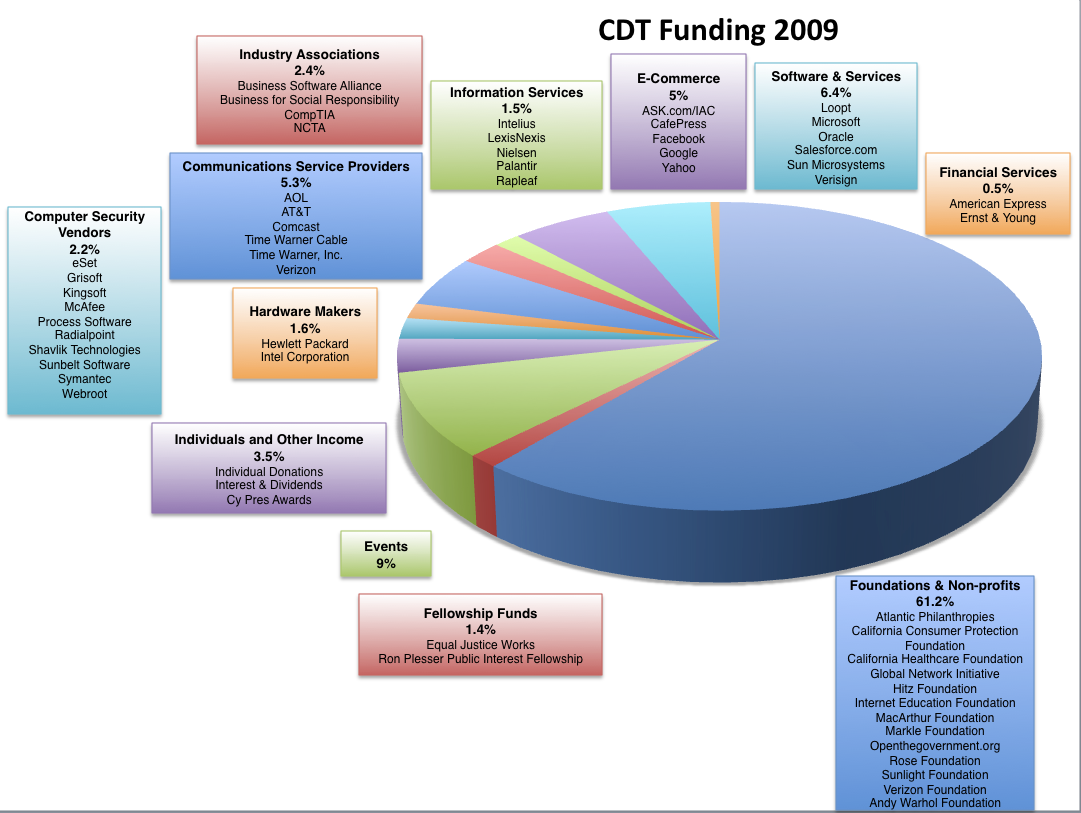
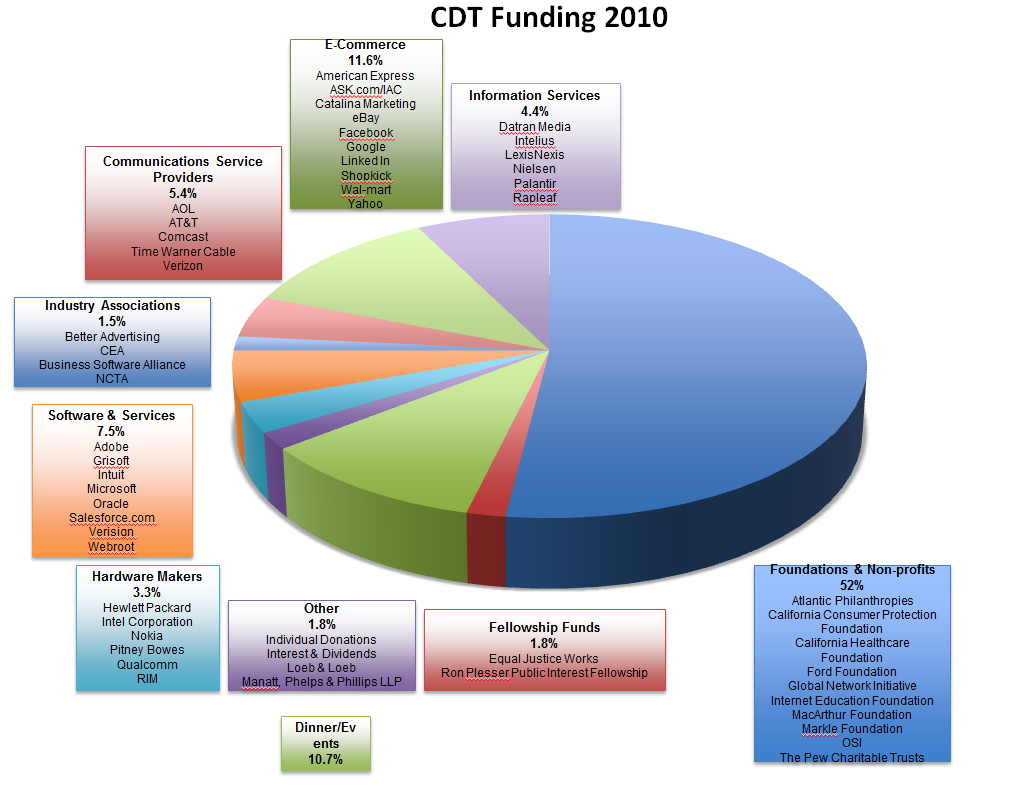
What is clear, from the acknowledgements at the end of the report, is that the researchers received financial support from Adobe. Looking at CDT's funding charts for 2009 and 2010, it looks like 2010 is the first year that Adobe has given any money to CDT. Was this funding tied to the creation and publication of this report?

Both Adobe and CDT are thanked by the researchers for assistance in developing the experimental protocol, and several CDT staff members are thanked for providing the researchers with assistance and feedback on their report. One other person who is thanked for his assistance is Reed Freeman, a partner at the law firm Morrison & Foerster.

Given the trigger-happy nature with which some firms fire off DMCA cease and desist letters, or call in Department of Justice, it is unfortunately quite common for privacy and security researchers to have to solicit the advice and assistance of attorneys before publishing research. I myself have several attorneys on speed-dial, and have turned to the absolutely amazing attorneys at the Electronic Frontier Foundation (EFF) on several occasions.

What puzzles me though, is why Professor Cranor did not go to the EFF for her legal questions, particularly given that she serves on EFF's board of directors. Instead, she sought and received feedback from Reed Freeman.

As far as I know, Reed has no experience or special expertise in helping academic researchers avoid lawsuits from pissed off companies. However, he does have quite a bit of experience in helping companies engulfed in privacy scandals escape the wrath of the Federal Trade Commission. For example, he represented Netflix a year ago, after the FTC took an interest (pdf) in the company's plan to share a second dataset of its customers' movie reviews.

I would love to find out the role that he played in shaping this study and the final report. Did he provide advice to these researchers on a pro-bono basis, or did Adobe pick up the likely very expensive tab for his assistance?

Research methodology

This study was a response to a 2009 study by Soltani et al, which coined the term "respawning Flash cookies" and exposed several major web properties and advertising networks engaging in the practice.

Leaving aside the potential issues that Joe Hall has raised of how the researchers chose the 500 random sites, I want to focus on one key area which suggest serious limits (and perhaps even flaws) in this study.

Consider the data collection method followed by Soltani:
Each session consisted of starting on a Firefox about:blank page with clean data directories. We then navigated directly to the site in question (by entering the domain name into the browser’s navigation bar) and mimicked a ‘typical’ users session on that site for approximately 10 pages. For example, on a video site, we would search for content and browse videos. On a shopping site, we would add items to our shopping cart. We did not create accounts or login for any of the sites tested. As a result, we had to ‘deep link’ directly into specific user pages for sites such as Facebook.com or Myspace.com since typically these sites do not easily allow unauthenticated browsing.

In the CMU study, the researchers visited the front page only of the top 100 sites, plus an additional random 500 sites. The researchers did not navigate beyond paywalls, conduct searches, click on items to add them to shopping carts, or otherwise interact with the sites. As such, any Flash cookies present on these other pages have gone undiscovered.

Naming names

One important norm in the academic privacy community, is that when researchers discover companies engaged in privacy invasive (or even just problematic) practices, they are named. Soltani et al named the companies they discovered respawning Flash cookies, Krishnamurthy and Wills (pdf) named Facebook, MySpace and a few other social networks that were leaking user identifiers via referrer headers, and Jang et al (pdf) named YouPorn, Morningstar, Charter and the dozens of other firms they discovered abusing CSS flaws to determine users' browsing history.

Similarly, when Professor Cranor, Dr McDonald and several other CMU researchers published a paper last year examining the extent to which major websites misrepresent their privacy policies via machine-readable P3P headers, the researchers identified the offending websites.

It seems curious then that this time around, these same researchers would decide to not identify the two companies that they discovered were engaged in Flash cookie respawning.

It is just a wild guess, but I suspect that the decision not to identify the offending firms was not a decision left up to the researchers. What I do not know though, is if this was a decision made by CDT, or Adobe.

Adobe's commitment to privacy

One year ago, you submitted written comments (pdf) to the FTC as part of its series of privacy roundtables. In your submission, you wrote that:
Adobe condemns the practice of using Local Storage to back up browser cookies for the purpose of restoring them later without user knowledge and express consent.

...

Adobe is committed to supporting research to determine the various types and extent of the misuse of Local Storage. We are eager to participate in the discussion of which uses are and are not privacy friendly. We will support appropriate action, in consultation with the development, advocacy, regulatory, and legislative communities, to eradicate bad, unintended uses of Local Storage.

...

Adobe Supports the Commissions’ Use of its Authority to Police Unfair and Deceptive Acts and Practices in Commerce.

Adobe believes that existing legislation and regulation provide the Commission with robust enforcement authority against deceptive or unfair trade practices, including the use of Local Storage to re-spawn cookies users have deleted.


Adobe should identify the offending websites, or at least rat them out to the FTC

The studies published by Soltani et al, Krishnamurthy and Wills and Jang et al have all lead to class action lawsuits against the companies engaged in the various privacy violating activities exposed by these researchers. As such, it is quite reasonable to assume that had the CMU Flash cookie study identified the two firms that were caught engaging in Flash cookie respawning, class action lawsuits would have soon followed.

Given the strong tone you took in your FTC comments, and the fact that Adobe "condemns" the misuse of your technology to violate consumers' privacy, it is surprising that you have not pushed for the identification of these two companies. Surely the millions of users of Flash who have had their privacy violated by these firms should have an opportunity to seek their day in court?

Even if you do not wish to expose these firms to the threat of class action litigation, at the very least, you should turn them in to the FTC, which would then be able to investigate the firms, and prohibit them from engaging in similar privacy violations in the future.

As such, I hope you will confirm if you know the identity of the two firms discovered by the CMU researchers, and further confirm what plans you have, if any, to provide FTC staff with the evidence that was uncovered.

It is time for Adobe to be a leader on privacy. Turning these two firms in to the FTC would be a good first step.

With regards,

Christopher

A lesson on saying no to governments from Google, Twitter and Vodafone

I've been thinking a lot recently about the role that technology companies play in facilitating or frustrating the efforts of governments to spy on or censor their citizens.

As such, I think it is interesting to compare the actions by a few large firms in response to the recent events in Egypt.

First, from Google and Twitter yesterday:
Like many people we’ve been glued to the news unfolding in Egypt and thinking of what we could do to help people on the ground. Over the weekend we came up with the idea of a speak-to-tweet service—the ability for anyone to tweet using just a voice connection.

We worked with a small team of engineers from Twitter, Google and SayNow, a company we acquired last week, to make this idea a reality. It’s already live and anyone can tweet by simply leaving a voicemail on one of these international phone numbers ...

We hope that this will go some way to helping people in Egypt stay connected at this very difficult time. Our thoughts are with everyone there.
And Vodafone, on Friday:
All mobile operators in Egypt were instructed on Friday to suspend services in some areas amid widespread protests against President Hosni Mubarak's rule, Vodafone Group PLC (VOD) said in a statement.

"All mobile operators in Egypt have been instructed to suspend services in selected areas," the U.K. company said, adding that under Egyptian law it was "obliged" to comply with the order.
The following day, Vodafone issued an updated statement:
Vodafone restored voice services to our customers in Egypt this morning, as soon as we were able.

We would like to make it clear that the authorities in Egypt have the technical capability to close our network, and if they had done so it would have taken much longer to restore services to our customers.

It has been clear to us that there were no legal or practical options open to Vodafone, or any of the mobile operators in Egypt, but to comply with the demands of the authorities.

Moreover, our other priority is the safety of our employees and any actions we take in Egypt will be judged in light of their continuing wellbeing.
These statements reveal significantly different positions by large, multi-national corporations. Google and Twitter opted to thumb their noses at the Egyptian government's attempt to silence its citizens, while Vodafone meekly complied, shutting down one of the largest wireless phone networks in the country.

Does this mean that Twitter and Google value human rights more than Vodafone? Does it mean that Vodafone hates freedom? Not really.

The government has guns, and we don't

For a bit of insight on this, lets turn to Google's CEO, Eric Schmidt, in what is perhaps his most truthful interview ever on the topic of privacy, and reason why consumers should not trust their data to Google:
There is a problem with the government which is that they have guns and we don't. And so the term "resistance", you want to be careful ... We are required to follow US law, and we do so, even if we don't like it. As the CEO of a public company (or a private company) there can be no other answer.


The key difference between these firms, is that neither Google nor Twitter have any infrastructure located in Egypt, while Vodafone likely has hundreds of millions of dollars worth of equipment located in the country. While the Egyptian government could raid Google's Cairo office and arrest its local marketing staff, the government cannot take Google's servers (which are located in other countries) offline. Twitter is in an even safer position, as it doesn't even have a local office in Egypt -- there is nothing that the government can do to hurt the company.

As such, while Google and Twitter certainly deserve praise for going out of their way to frustrate the censorship efforts of the Egyptian government, we should remember that these firms are sacrificing very little in order to do so.

If Vodafone dared to ignore the government's order and kept its network running, it is likely that the authorities would seize or destroy the firm's hugely valuable equipment.

In order to accurately gauge a company's willingness to tell a particular government to go and fuck itself, you have to examine the actions of that company in countries where it actually has significant assets, and where the government can actually shut down its services.

Rather than comparing Vodafone's actions to Google's Tweet-via-voicemail effort, it might be more useful to compare it to Google's recent, voluntary move to scrub the auto-suggest results in its search engine, censoring a few high-profile keywords associated with filesharing and piracy. Google didn't even wait for the government to pass laws requiring it to censor the rules, merely the threat of such legislation on the horizon was enough to get the company to act.

This is not to say that Google is evil, merely that it is a rational actor, and is going out of its way to avoid upsetting governments that can actually harm the company. Keep this in mind the next time that Google (or any other firm) thumbs their nose at the censorship activities of some government in a far away country -- such actions are easy, but much tougher at home.